
Trump India–Russia Trade Tariffs: Impact, Policy Shifts & Global Reactions
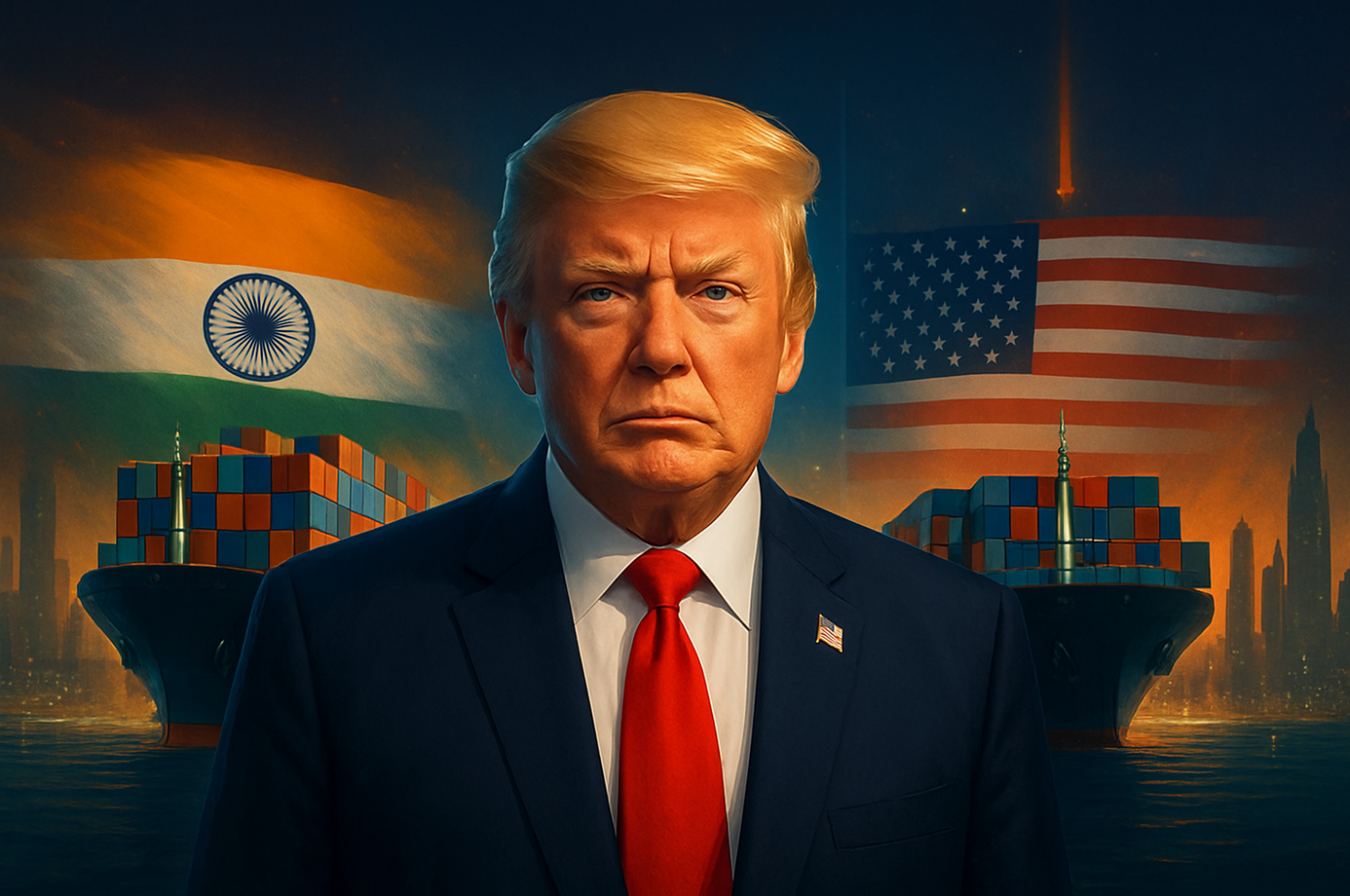
Economists and political analysts instantly focused on Trump’s India-Russia trade tariffs when he made a comeback to the world scene with his revised 2025 trade strategy. His previous “America First” approach had already caused upheaval that the entire globe had seen. Now, Trump’s administration seems prepared to reinstate Trade Tariffs tariffs that could change the economic ties between the United States, India, and Russia, despite renewed pledges to safeguard American industries and balance trade deficits.
The stakes are very high: Russia continues to be a major oil provider and geopolitical influence in spite of sanctions, while India is a growing manufacturing hub and important strategic partner. The global trade order as a whole as well as the bilateral relationships between these countries may be altered by Trump’s tariff program.
This essay will examine the potential impact of Trump’s protectionist trade policy on India-Russia trade relations, the industries most at risk, and the potential worldwide repercussions. Insights from professionals, potential commercial scenarios, and potential national adaptations in the upcoming years will also be covered.
Trump’s Trade Policy for 2025: Protectionism Is Back
One of Donald Trump’s main points when he unveiled his 2025 economic agenda was to “protect American jobs and industries.” Building on the principles of his first term, his new trade framework targets imports that he believes “unfairly disadvantage” American manufacturers.
Three pillars form the foundation of Trump’s 2025 trade policy:
- High import taxes on vital goods including electronics, steel, and auto parts.
- Subsidies and tax incentives to encourage manufacture in the United States.
- Trade agreements with nations that have a trade surplus with the US should be reevaluated.
Although this strategy benefits local labor and manufacturers, it presents a significant obstacle for international trading partners, particularly Russia and India.
India’s Position: Balancing Risk and Opportunity
India is in a precarious situation. Russia is a vital energy and defense partner, while the United States is one of its top export markets. India may have to adjust its trading strategies between these two superpowers as a result of Trump’s tariff plans.
United StatesTrade Tariffs Tariffs on India: New Disturbances
India lost its Generalized System of Preferences (GSP) privileges, which had permitted duty-free exports of more than $5.6 billion worth of commodities, during Trump’s previous term. Small and medium-sized businesses were negatively impacted by US Trade tariffs on India, particularly in industries like steel, textiles, and aluminum.
Analysts anticipate a resurgence of comparable metrics in 2025:
- Potential Trade tariffs of 10–25% on car parts, IT hardware, and medications.
- Stricter origin regulations to prevent India from serving as a backdoor for Chinese goods.
- Changes to laws governing digital trade that have an impact on India’s rapidly growing tech exports.
India has responded in a practical manner. By bolstering domestic supply chains and negotiating alternate export routes through ASEAN and Europe, the government is promoting “Made in India 2.0.”
Possibilities Among Difficulties
It’s interesting to note that Trump’s more general anti-China views may still be advantageous to India. India’s sizable labor force, developing infrastructure, and English-speaking talent pool make it an attractive destination for fresh investment as American businesses look to diversify their supply chains.
However, if Trade tariffs increase dramatically, the advantages can be outweighed by increased export expenses and exchange rate volatility.
Russia’s Predicament: Energy, Strategic Leverage, and Sanctions
Because of sanctions imposed after geopolitical wars, Russia’s trading relationship with the United States is already strained. Trump’s proposed US Trade tariffs on Russia will probably target energy, technological components, and exports with two uses in addition to conventional commodities.
Effect on the Economy of Russia
Russia’s top exports to the United States are:
- Petroleum products and oil
- Metals (nickel, palladium, and aluminum)
- Industrial substances
Washington wants to restrict Russia’s sources of income, so fresh tariffs would increase the pressure that sanctions have already produced. To make up for losses, Moscow is turning eastward, toward markets in China, India, and the Middle East.
Trade Relations Between Russia and India Are Under Pressure
Since 2022, discounted oil exports and defense cooperation have been major factors in the growth of India-Russia trade relations. However, Trump’s worldwide Trade tariffs may make financial settlements, logistics, and payments more difficult.
India might have unintended repercussions:
- Importing Russian weapons and oil carries the possibility of secondary sanctions.
- As U.S.-aligned institutions tighten compliance, there are banking challenges.
- The volatility of currency exchange has an impact on rupee-ruble settlements.
India must balance preserving strategic relationships without endangering ties with the United States, while Russia will attempt to use oil exports as leverage.
The Effects of Trump’s Tariff Agenda on International Trade
Impacts of Ripples on International Supply Chains
The impact on international trade might be enormous if Trump raises taxes to include products from both Russia and India. Industries like medicines, IT services, metals, and energy that depend on parts from these countries may see delays and higher costs.
International businesses may have to:
- Restructure networks for sourcing.
- Develop “friendshoring” tactics, which involve shifting production to allies.
- Due to the inflation of raw materials, reevaluate pricing models.
WTO and Diplomatic Repercussions
World Trade Organization (WTO) disputes would very definitely be triggered by a surge of tariffs. Russia, which is shut out of many trade forums, may turn inward, while India, which is renowned for its diplomatic balance, may take the lead in demands for dispute resolution.
If tariffs are implemented in all of the main economies, economists estimate that the growth of global commerce will drop by 0.3 to 0.5% per year.
Protectionist Trade Policy: Its Fundamental Idea
Protectionism, or the idea that domestic companies need to be protected from overseas competition, is at the core of Trump’s economic agenda. Even though it could result in immediate household benefits, the long-term effects frequently include:
- Increased costs for customers.
- Trade partners’ retaliatory tariffs.
- Inefficiencies in the supply chain.
Trump’s protectionist trade policies may limit technology sharing, lower export volumes, and encourage the formation of more robust South-South economic alliances between Russia and India.
Analysis by Sector: Who Benefits, Who Loses?
1. Trade in Oil and Energy
Since 2022, Russia’s oil shipments to India have increased significantly. India’s capacity to buy cheap Russian petroleum may be limited if Trump’s administration increases U.S. sanctions and tariffs, which might result in higher shipping insurance, payment processing, and transportation expenses.
Winners: Middle Eastern exports and American shale producers
Losers: Russian oil firms and Indian refiners
2. Technology and Defense
Russia’s defense supplies to India may come under increased scrutiny. Technology transfers might be slowed by any U.S. action to enforce CAATSA-style penalties or tighten defense export laws.
Winners: American defense contractors
Losers: Indian military acquisition plans
3. Services and IT
India’s BPO and IT sectors rely significantly on American customers. Digital services may not be directly subject to tariffs, but regulations governing data localization and visa restrictions may cause issues.
Winners: Latin American outsourcing centers
Losers: Indian service exporters
4. Manufacturing and Metals
In the past, Trump’s steel and aluminum tariffs rocked the world’s metals markets. A recurrence of the situation would affect India’s small-scale industries that depend on reasonably priced inputs as well as Russia’s metal exports.
Winners: Native metal producers in the United States
Losers: Indian SMEs and Russian miners
Case Summary: Tariff Insights for 2018–2020
The Trump administration’s early years provide insight into potential future developments:
- Global price inflation for electronics and machinery was brought on by the U.S.-China trade conflict.
- India demonstrated its ability to resist by imposing retaliatory taxes on American walnuts, apples, and almonds.
- Russia’s shift to exports to Asia boosted regional collaboration but restricted access to Western technologies.
In order to avoid relying on the US currency, India and Russia will diversify if history is repeated, looking for alternative trade routes through the BRICS alliance and digital currencies.
Geopolitical Consequences
Trump’s tariffs are geopolitical levers in addition to being economic instruments. By focusing on Russia and India, the US could:
- Put pressure on India to reduce its energy and defense connections with Russia.
- Show that you’re taking global trade imbalances more seriously.
- Boost your ability to negotiate in upcoming trade agreements.
It will be crucial for India to preserve its strategic independence. Russia’s economic stability will depend on its ability to maintain export earnings while avoiding sanctions.
Economic Outlook: The Upcoming Five Years
Three possible outcomes are projected by economists:
1. Most Likely: A Moderate Tariff Environment
- 10%–20% tariffs on specific products.
- Escalation is avoided through negotiations.
- India adapts by producing locally.
2. The Escalation of Aggressive Tariffs
- Full-scale Trump trade war that targets several industries in 2025.
- Growth in the global GDP decreases by 0.5 to 1%.
- Russia and India strengthen BRICS+ ties.
3. Phase of Strategic Adjustment
- Following diplomatic talks, U.S. tariffs are lowered.
- Relocating supply chains outside of China benefits India.
- Eurasian trade networks are strengthened by Russia.
How Companies Need to Get Ready
Businesses that operate in the Russian, Indian, and American markets ought to:
- Increase the variety of your supplier networks.
- Protect yourself against fluctuations in currency values.
- Track WTO filings and tariff announcements.
- For tariff exemptions, look into regional trade agreements.
- To withstand shocks, create pricing models that are adaptable.
In the meantime, investors should pay particular attention to the logistics, metals, and energy sectors, as these industries face both possibilities and hazards due to tariff adjustments.
Conclusion: Handling an Unpredictable Future in Trade
A broader global trend toward economic nationalism is reflected in the Trump, India, and Russia trade tariff issue, which goes beyond simple charges and percentages. The way that countries view globalization is changing as a result of Trump’s heightened emphasis on domestic manufacturing and trade balance.
While Russia seeks resilience in the face of sanctions and restricted markets, India must balance Russian collaboration with U.S. expectations. The tremors will affect global supply systems, investment flows, and diplomatic alliances.
In the end, success will be determined by flexibility rather than alignment. In the next stage of the restructuring of global trade, countries who can quickly change course, diversify economically, and retain diplomatic flexibility will prosper.
FAQs
1. What trade tariffs do Trump, India, and Russia have?
Under Trump’s 2025 trade strategy, these possible import taxes or limitations might have an impact on trade between the United States, India, and Russia, changing the nature of international trade.
2. How would India’s economy be impacted by US Trade tariffs?
Increased tariffs could push India to diversify its trading partners, increase costs for Indian industries, and lower export competitiveness.
3. What effect will Trump’s trade policies have on Russian exports in 2025?
Indeed. Russia’s metals and energy sectors may become even more isolated as a result of US tariffs, making Moscow more dependent on Asian markets.
4. How will Trump’s proposals affect trade relations between Russia and India?
They might get stronger as both nations look to invest in energy cooperation and boost bilateral trade in local currencies in an effort to offset U.S. tariffs.
5. How do these tariffs affect international trade?
They might mimic the economic turmoil of the 2018–2020 trade conflicts by increasing prices globally, upsetting supply chains, and slowing trade growth.
6. Can Trump’s trade protectionist stance last?
Domestic sectors may see short-term gains, but inflation and strained diplomatic relations are frequently the long-term consequences.
7. How can companies get ready for fluctuations in tariffs?
To reduce exposure to tariff increases, employ currency hedging, diversify your suppliers, and adjust to regional trade agreements.
















15 Comments
Hey, Indo buddies! Been kicking around on ok789id for a bit. Honestly, not bad! Selection is pretty good and I saw my favorite games. Could stand to see some more local payment options tho. Give it a whirl ya: ok789id
Okay, 115bet, let’s see what you’ve got. Another betting site to try my luck on. Fingers crossed! 115bet
Gotta say, logging into 7ggglogin wasn’t a hassle at all. Nice and smooth. If you’re looking to get in quickly, here’s the spot: 7ggglogin.
B52.cc on b52web.net… hmm, gotta scope this out later. Hope it rocks! b52.cc.
88clb8gq on Blackjack88clb… Sounds interesting will delve more into it. 88clb8gq.
JLBossVIPCasino… sounds fancy! VIP treatment, you say? Time to roll like a boss! Let’s get it: jlbossvipcasino
If you are looking for a VIP experience, check with 3kvip and see if it suits you. Here’s the link to see if they are the one: 3kvip
Heard good things of zx777game. Lots of cool stuff supposedly. Why not check them out yourself with this simple shortcut?: zx777game
Pak555game… hmmm, never heard of this. Well, why not give them a try. More competition, more potential! Check them out: pak555game
I’ve been searching high and low for a decent bet aki site, and betakibr.net looks promising. Worth a look if you’re into that kind of thing. More info here: bet aki
Thinking of trying my luck with cc88bet. Anyone have any experiences with them? Heard mixed reviews, but gonna see for myself. Click here: cc88bet
Donaldbbet.net looks interesting. I’m always on the hunt for new betting platforms. Will explore their offerings! Go to: donaldbbet
Yo, Jaya999bet, been placing bets here for a bit. Good odds, fast payouts when I actually win haha. Worth a look if you’re into sports. Check it out here: jaya999bet
Alright, MX Pistolocasino’s got some wild slots! Pretty cool if you’re into that stuff. Good payouts too, let the Pistolocasino rock! Give it a shot at mxpistolocasino
MXMDM77 is great for poker. I love the atmosphere, and there are so many different players. Try it for yourself at mxmdm77