
Canada Immigration Plans 2025–2026: New Targets, Pathways & Policy Updates
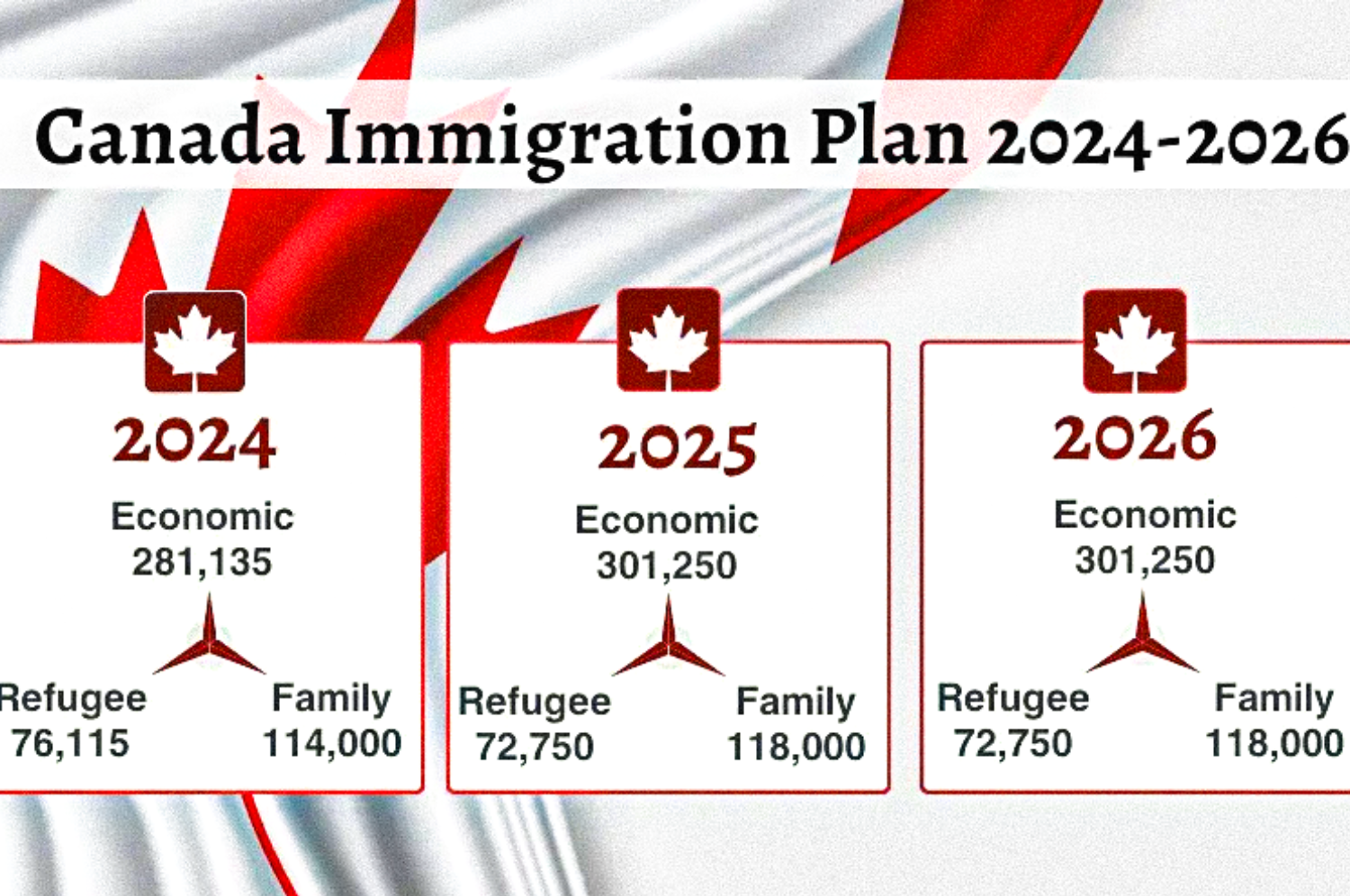
With new paths, tighter regulations, lower targets, and shifting priorities, the Canada’s Immigration plans for the 2025–2026 decade represent a sea change. You need clarification if you’re getting ready to migrate, apply, or invest in Canadian immigration. We’ll go over the permanent resident and temporary resident targets, Express Entry adjustments, the changing function of provincial nomination, the effects on international students, and helpful advice you can put into practice right away in this extensive guide.
We will first go over the most important figures you need to be aware of, such as targets, reductions, and quotas. Next, we will discuss program and policy changes, including what is new and what is at danger. We’ll next go over how you can still find your way in this more constrained setting. We will conclude by outlining potential dangers and providing a summary that you can bookmark.
Let’s get started.
Overview: Canada’s Immigration Significant Change in Immigration Plans for 2025–2026
Wide Goals and a Downward Shift
Canada’s Immigration has announced major immigration level reductions beginning in 2025 as part of the 2025–2027 Immigration Levels Plan.
Admissions of permanent residents (PR) are expected to reach 395,000 in 2025, 380,000 in 2026, and 365,000 in 2027.
The goals for temporary resident arrivals (new immigrants with employment and study visas) are 673,650 in 2025, 516,600 in 2026, and 543,600 in 2027.
International students are expected to account for around 45% of temporary resident arrivals in 2025, 59% in 2026, and 56% in 2027.
By the end of 2026, the plan aims to lower the percentage of temporary (non-permanent) residents in Canada to 5% of the country’s overall population.
This deviates from past goals, which called for 500,000 PRs in 2025 under earlier plans (2024–2026).
While moving toward more “measured, sustainable growth,” the cuts are intended to relieve pressure on housing, social services, infrastructure, and integration burdens.
Changes in Policy and Strategic Priorities
Focus on Canada and the Shift from Temporary to Permanent
Prioritizing those who are already in Canada’s Immigration, such as temporary employees and international students, for the transition to permanent status is a defining feature. It is anticipated that those who are currently employed or enrolled in school in Canada will account for over 40% of PR admissions in 2025.
This “in-Canada’s Immigration focus” is linked to improved workforce integration, increased consistency, and risk control while lowering reliance on foreign selection.
Sector-Based and Category-Based Express Entry Draws
Under Express Entry, the federal government has put a renewed emphasis on category-based draws in 2025. These provide preference to applicants in fields where there is a labor shortage, such as healthcare, trades, STEM, education, agriculture, and fluency in French.
In 2025, a new category called “education” was introduced to match academic qualifications with immigration selection.
Compared to general draws, these sector-specific rounds frequently permit qualified candidates to have lower CRS thresholds.
Contractions of the Provincial Nominee Program (PNP)
A sharp reduction in PNP allocations is among the more notable changes. The 2025 quotas for certain streams have been cut by around 50%.
PNP allocations for 2025 are set at 55,000 permanent residents, which is less than the previous plans’ goal of 110,000+.
To reclaim areas, some provinces are renegotiating with the IRCC; others have temporarily suspended streams or paused intake.
Pilot Projects and New or Developing Paths
The IRCC’s departmental plan for 2025–2026 hints at several innovations:
- The Economic Mobility Pathways Pilot will be made permanent by the end of 2025.
- Establishing a new source of foreign workers specifically for fish and agriculture processing.
- Modifying the eligibility standards, field-of-study requirements, and connection with Express Entry categories for the Post-Graduation Work Permit (PGWP).
- Prioritizing applications from high-impact, wealth-creating candidates for the Start-Up Visa and Self-Employed programs.
Modifications to Regulations and Supervision
To simplify procedures, strengthen monitoring, and eliminate overlap between federal and provincial responsibilities, Canada’s Immigration is also updating its immigration laws.
Furthermore, eligibility may be further impacted by policy changes such as the Strengthening Canada’s Immigration System and Borders Act (Bill C-12/Strong Borders Act), particularly in asylum and IRB processes.
Effect via Stream or Program
Federal Economic Class and Express Entry
What’s Evolving:
- Additional category-based draws aimed at in-demand fields (e.g., STEM, education, health, trades, and French).
- Emphasis on applicants who are already in Canada; Canadian experience is increasingly valued.
- Lower CRS cutoffs may be allowed in category-based rounds.
- Certain PGWP-eligible subjects might align with Express Entry requirements, meaning not all graduate programs will qualify.
What Goes On:
The core programs — Canadian Experience Class, Federal Skilled Worker, and Skilled Trades — remain active. Applicants without Canadian work experience may still apply but will likely face higher CRS thresholds.
Approach for Candidates:
- Optimize CRS points early.
- Obtain Canadian work or study experience.
- Focus on priority areas (STEM, health, trades).
- Stay updated on PGWP and category-based draws.
PNP: The Provincial Nominee Program
What’s Evolving:
- Quotas for nominations are drastically lowered (often by 50%).
- Some provinces have delayed or paused specific PNP programs.
- PNP will align more closely with federal sectoral priorities.
What Goes On:
PNP remains a strong path for PR, especially for those with provincial ties or job offers.
Approach for Candidates:
- Research active provinces.
- Prioritize provinces focusing on federal priority sectors.
- Stay informed about provincial updates and intake windows.
- Keep Express Entry as a backup.
PGWP & International Students
What’s Evolving:
- Fewer study permits as part of the temporary resident reduction strategy.
- Provinces may need to issue attestation letters for study permits.
- Stricter field-of-study alignment with Express Entry.
- Students in non-qualified fields may lose PGWP eligibility.
What Goes On:
Bachelor’s, master’s, and doctoral students in core eligible programs remain unaffected.
Plan for Students:
- Choose PGWP-eligible programs.
- Confirm institutional participation in attestation systems.
- Ensure compliance with student caps.
- Use study-to-PR pathways strategically.
Temporary Foreign Employment and Other Routes
What’s Evolving:
- New fish processing and agriculture work permit streams.
- PNP candidates may renew work licenses up to two years under new policies.
- More competition for temporary resident caps.
What Goes On:
The IMP and TFWP will continue with tighter regulations.
Approach for Job Candidates:
- Target high-demand industries.
- Align eligibility with PNP or PGWP.
- Prepare applications early.
- Stay informed about updates.
Step-by-Step Guide: How to Succeed Under Canada’s 2025–2026 Immigration Plans
Step 1: Evaluate Your Profile
Assess education, language scores, work experience, preferred province, and financial readiness. Then choose the best path: Express Entry, PNP, Student Route, or Work-to-PR.
Step 2: Align Target Areas
Focus on healthcare, trades, STEM, education, and French sectors. Ensure credentials are recognized in Canada.
Step 3: Gain Canadian Experience
Study or work in Canada if possible to gain a competitive edge in category-based draws.
Step 4: Strengthen Your Profile
Improve CRS points via language, job offers, or education. Apply across multiple provinces for flexibility.
Step 5: Create Backup Routes
Have contingency plans like Self-Employed, Start-Up Visa, or alternate provinces.
Step 6: Timing and Readiness
Prepare documents early, monitor IRCC announcements, and apply promptly.
Hazards, Limitations, and Things to Watch
- Closed Streams: Mid-year closures possible.
- PGWP Changes: Some fields may lose eligibility.
- Federal Policy Adjustments: Bill C-12 and others can impact lesser-known streams.
- Increased Competition: Fewer seats mean higher standards.
- Provincial Variation: Some regions may tighten more than others.
- Processing Delays: Backlogs may increase.
Summary
- PR targets: 395,000 (2025), 380,000 (2026).
- Temporary resident cap: 5% by end of 2026.
- Focus: In-Canada applicants, targeted sectors.
- PNP reductions and PGWP modifications expected.
- Approach: Be proactive, adaptable, and strategic.
Conclusion
Canada’s 2025–2026 immigration policies mark a strategic recalibration, not a retreat. Success now depends on alignment, readiness, and adaptability.
Opportunities remain — but only for those who plan carefully, align with key sectors, and act swiftly.
FAQs
Q1. What are Canada’s exact PR targets for 2025–2026?
Canada’s Immigration Levels Plan calls for 395,000 new permanent residents in 2025 and 380,000 in 2026.
Q2. How will Express Entry change under the new plan?
Category-based draws will focus on STEM, healthcare, trades, education, and French proficiency; Canadian experience will carry greater weight.
Q3. Is the PNP still a viable immigration route?
Yes, but quotas have been halved to about 55,000 PRs, and competition will be tougher.
Q4. How will international students be affected?
Expect stricter study permit caps, tighter PGWP rules, and a focus on qualified academic fields.
Q5. How can candidates improve their chances?
Prioritize key sectors, gain Canadian experience, boost CRS scores, monitor PNP openings, and stay ready for surprise draws.
Q6. Can foreigners still immigrate from outside Canada?
Yes, through Express Entry and Federal Skilled Worker programs — but competition and cutoffs will be tougher.
















17 Comments
Gotta say, 123dbet caught my eye. Gave it a whirl, and I’m impressed! Cool interface. Defo worth a look-see! 123dbet
Petir108login, huh? Simple to sign in, which is a big plus. No one likes a complicated login process. Give it a whirl: petir108login
Right, let’s see if luck55 can change my fortunes. Fingers crossed eh? Here’s hoping: luck55
Guys, finding the official W88 site can be tricky. w88trangchunhacai seems to be the real deal. Use it as a landing page to make sure you get the genuine W88 experience. Good luck playing! w88trangchunhacai
Yo, check out vivabong88wiki! It’s been a decent resource when I needed info. vivabong88wiki.
Heard about 10nhâci on 12play23.net. Anyone tried em? Looking for a reliable spot. 10nhâci.
Another variation on Friv, maybe? Anyway some basic games on frivc. Give it a look.
Just hopped onto mn66 and I am already liking what I see. Nice and clean design. Good stuff! Try it here: mn66
Gave zt9398net a try and so far so good. Feels like a good place to chill and have some fun. Hit it up: zt9398net
Alright alright alright, 11acom. Haven’t had a huge payout yet, but the variety of games keeps me coming back. Worth a shot if you’re looking for something new. More luck to us all! Here’s the link: 11acom
Gotta say, jl333 has a decent selection. Not the biggest, but the games they have are well-made. Smooth performance, which is a big plus in my book. Definitely worth a look! jl333
A97bet? Yeah, I’ve had a few spins there. Site’s pretty easy to get around, and they seem to have a decent selection. Could do with a few more promos, but not bad overall. Worth checking out if you’re looking for something new. Check them out at a97bet
Alright, alright, alright… CO777, I see you! Had a blast there last night. Good vibes, good games. I’m not saying you’ll win a fortune, but it’s a fun place to spend some time. Feeling lucky? Go check out co777.
Luckyplaymaya…I like the sound of that! Been trying my luck there lately and, honestly, not been disappointed. The Maya theme is cool, and the games keep me entertained. Maybe it IS lucky? Find out for yourself at luckyplaymaya!
Alright mates, just gave 79king3 a whirl. Not bad at all! Loads of games to choose from, and getting signed up was a piece of cake. Check it out here: 79king3
Oi, you looking for some lottery action, mate? I’ve been digging soxominhngoc lately. It’s got all the lottery games you want, and it’s pretty straightforward. Check them out and see what you think: soxominhngoc
Tried out jl59 the other day and found some really interesting slots. Pay outs are good sometimes, so it’s worth checking out. Have a look at them here: jl59